How to set up an axolotl tank
Set up an axolotl tank properly: tank size, where to put it, sand or bare floor, gentle filter, hides, plants, cycling and the day your axolotl moves in.
1. The tank
Buy for an adult, even if you're starting with a baby. Axolotls grow fast and a 5 cm youngster can be 20 cm within a year. The minimum for one adult is about 75 litres with a floor of 90 × 45 cm. For two of the same size, 100 litres or more and the same 90 cm length at least. Our tank planner does the sums for more.
Long and low is better than tall. A "3 ft" tank is a good shape. Make sure it comes with or can take a lid: axolotls occasionally jump.
2. Where to put it
- A cool room. North-facing rooms, hallways and spare bedrooms beat conservatories and kitchens.
- Out of direct sun. Even an hour of sun on the glass can push the water up several degrees.
- Away from radiators, ovens and electronics.
- On something strong and level. Water weighs 1 kg a litre. A 120-litre tank with sand and stand is well over 150 kg. Use a proper aquarium cabinet.
3. What goes inside
Floor
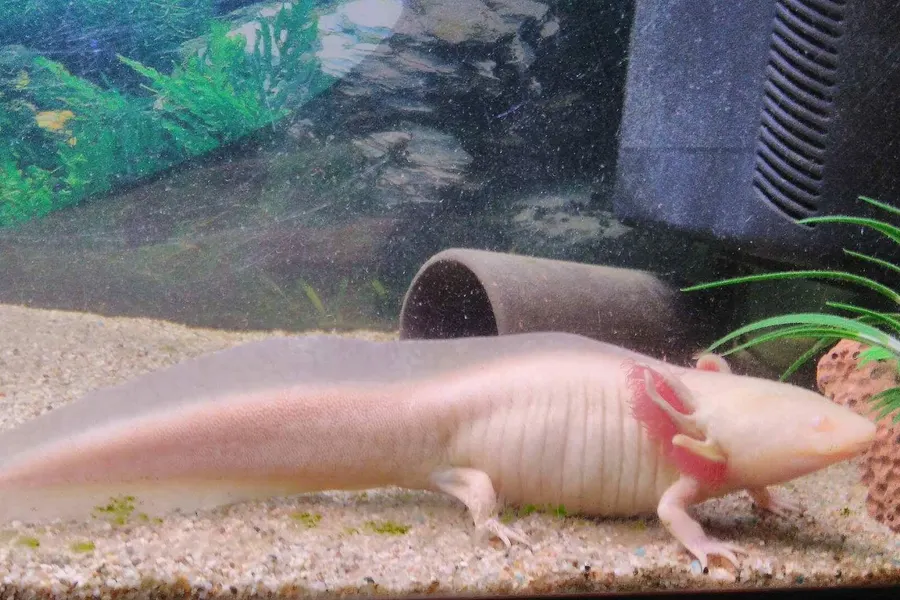
Fine sand (grains under 1 mm) or no substrate at all. Axolotls suck in food with a gulp and take whatever is around it. Fine sand passes through. Gravel and small pebbles can block the gut and that often needs surgery. Large smooth stones, bigger than the axolotl's head, are fine too.
Filter
The best match is a large sponge filter driven by an air pump: gentle, cheap and easy to clean. A canister filter works if you spread the outflow with a spray bar along the back glass. If the gills are swept forward or the axolotl avoids one end of the tank, the flow is too strong.
Hides and plants
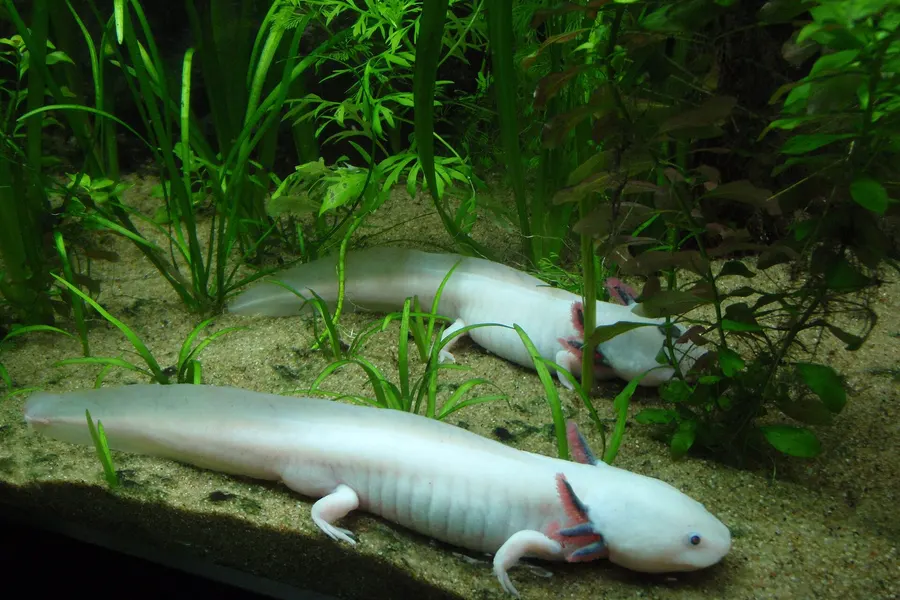
Give each axolotl a cave, a wide pipe or a terracotta pot on its side. Plants that cope with low light work best: anubias and java fern tied onto wood or rock, or hornwort floating at the top for shade. Avoid sharp ornaments.
Light and heat
No heater. No special lighting. If you add a light for the plants, keep it low and on for a few hours only.
4. Cycle the tank (4–8 weeks)
A new tank has no bacteria to break down waste. Without them, ammonia from the axolotl builds up and burns its gills. "Cycling" means growing those bacteria first. It's the step most people skip and the one that matters most. Our cycling guide walks you through the fishless method day by day.
5. Moving-in day
- Test the water: ammonia 0, nitrite 0, nitrate low. Do a big water change if nitrate is high.
- Check the temperature is between 16 and 18 °C.
- Float the sealed bag for 15–20 minutes so the temperatures match.
- Tip the axolotl gently into a net or your hand under the water and let it go. Don't pour the shop's water into your tank.
- Lights low, room quiet. Leave it alone for the evening.
- Offer a small amount of food the next day. Don't worry if it ignores food for a day or two.
Checked November 2026. General information, not veterinary advice.