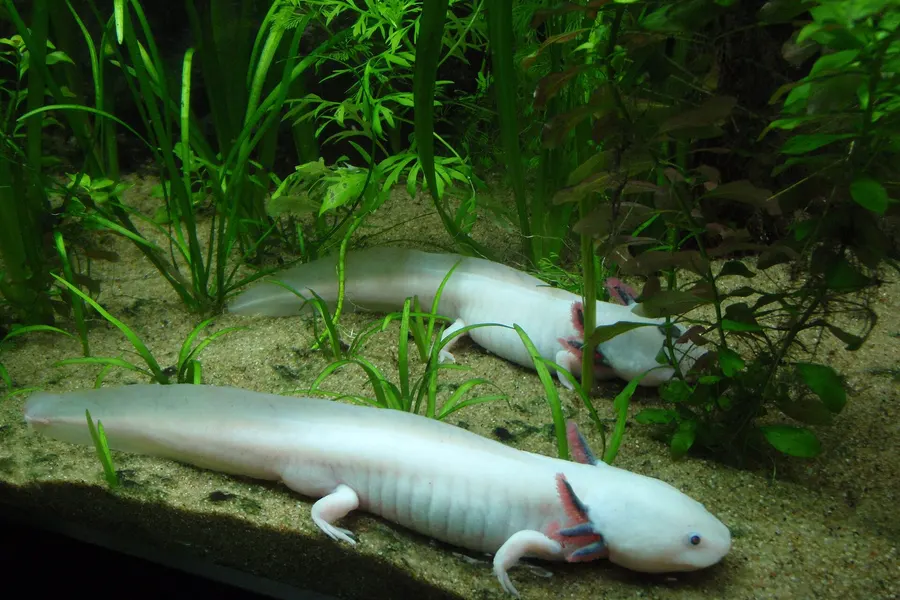
How to cycle an axolotl tank
Why an axolotl tank must be cycled first, how to do a fishless cycle with ammonia in 4–8 weeks, and what your test results mean.
Axolotls produce ammonia, which is toxic. In an established tank, bacteria living in the filter turn ammonia into nitrite (also toxic) and then into nitrate (much less harmful, removed by water changes). A brand-new tank has none of those bacteria. Growing them is called cycling.
What you need
- The tank set up and running: filter on, water conditioned
- A source of ammonia: pure ammonia or ammonium chloride sold for fishless cycling
- A liquid test kit for ammonia, nitrite and nitrate
The fishless cycle, step by step
- Day 1: add ammonia to about 2 ppm (follow the bottle). Test the next day.
- Week 1–2: keep ammonia around 2 ppm. When ammonia starts falling on its own and nitrite appears, the first bacteria have arrived.
- Week 2–5: nitrite rises, then starts falling as nitrate appears. Keep dosing ammonia daily so the bacteria have food.
- The finish line: you dose ammonia, and 24 hours later both ammonia and nitrite read 0. Repeat for a few days to be sure.
- Before the axolotl arrives: do a large water change to bring nitrate down, check the temperature, and stop dosing ammonia.
| Test shows | Meaning |
|---|---|
| Ammonia high, nitrite 0 | Early days. Be patient. |
| Ammonia falling, nitrite rising | Halfway. First bacteria working. |
| Ammonia 0, nitrite 0, nitrate present 24 h after dosing | Cycled. Ready after a water change. |
Already have an axolotl in an uncycled tank?
Don't panic. Test daily. Whenever ammonia or nitrite are above 0, change 30–50% of the water with conditioned water at the same temperature. Feed lightly and remove leftovers. Some keepers move the axolotl into a fridge-cool tub of clean water changed daily while the tank finishes cycling. Ask a vet if the axolotl seems unwell.
Quick answers
How long does cycling take?
Do bottled bacteria work?
Can I cycle with the axolotl in the tank?
Checked November 2026. General information, not veterinary advice.